
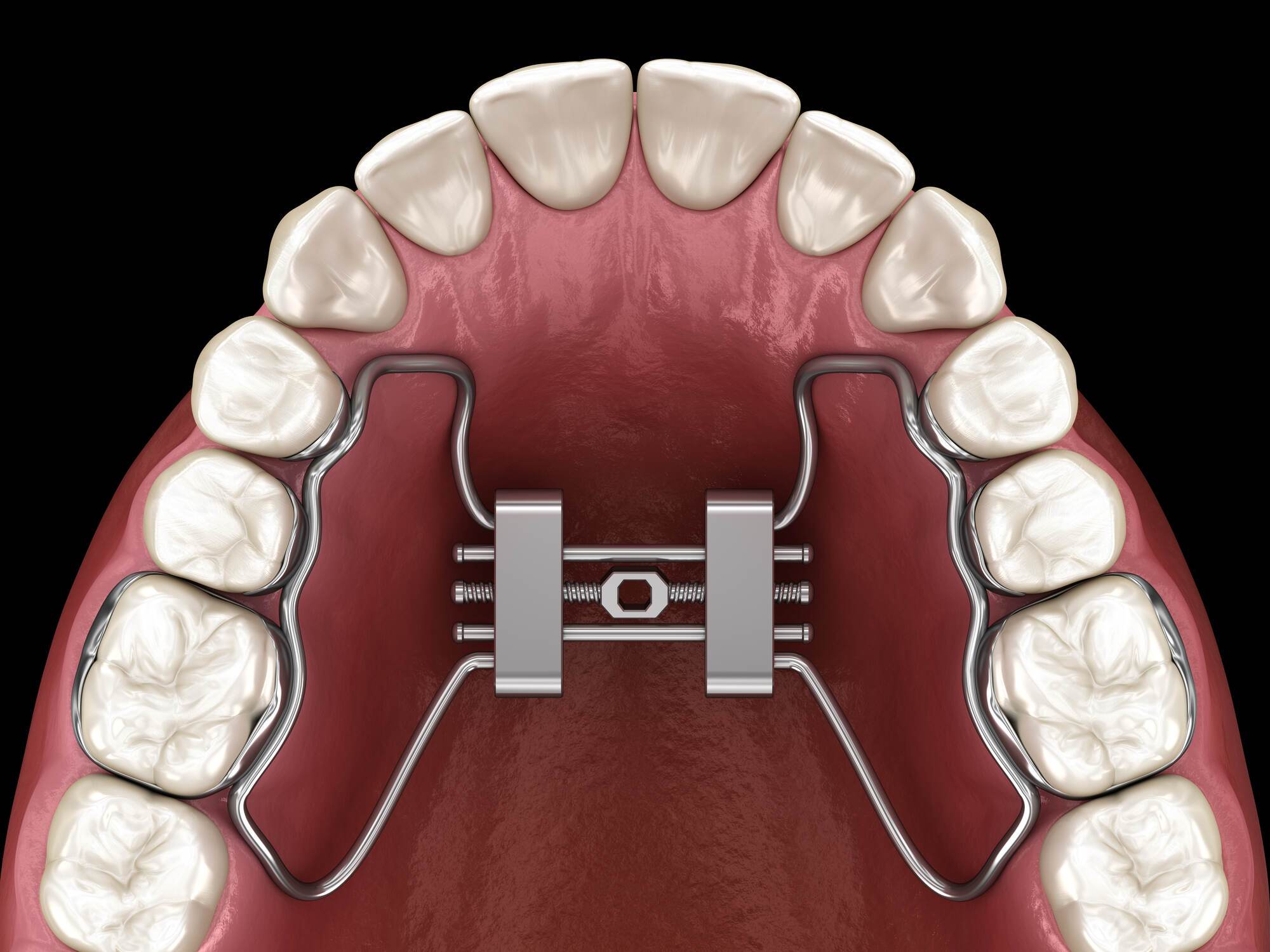
Orthodontists use a variety of tools to correct malocclusions (bite problems) in children, teens, and adults. But few are as misunderstood as the palatal expander.
Palatal expanders are used to gently apply pressure to children’s jaws as they develop, helping them grow in a way that prevents significant transverse bite problems in the future. While not everyone requires an expander, it’s a simple, common step you don’t need to fear.
In this guide, the orthodontists at the American Association of Orthodontists shed light on what a palatal expander is, how it works, and what you can expect if you or your child needs jaw expansion.
What Do Palatal Expanders Do?
Quite simply, a palatal expander works similarly to braces, where orthodontists will gradually increase the pressure exerted on your teeth and jaws to guide them into the proper positions.
The device sits across the roof of the mouth, also known as the palate and is attached to the upper back teeth. Some expanders are adjusted by turning a small screw to gradually widen the upper jaw. Others use built-in springs or wires and don’t require turning.
What Do Palatal Expanders Treat?
Not every patient will need a palatal expander. In fact, they are typically reserved for treating severe malocclusions or assisting in jaw development to proactively prevent issues from worsening.
The most common issues palatal expanders treat include:
- Crossbite: Misalignment of the teeth, when the upper teeth are positioned inside the corresponding lower teeth as the jaws are closed. A palatal expander can correct a crossbite by widening the underlying bone, preventing uneven wear, gum recession, asymmetric jaw growth and jaw problems.
- Severe Crowding: A narrow jaw can lead to inadequate space for ideal teeth alignment. The expander can create space for your orthodontic specialist to shift your teeth into proper positions.
- Impacted Teeth: Narrow jaws can also block teeth from erupting in their proper positions. Palatal expanders increase the width of the jaw to improve the space available for erupting permanent teeth.
- Breathing Issues: Sometimes, palatal expanders are prescribed when a child has trouble breathing. The expander widens the nasal floor and the jaw, which can improve nasal airflow.
How Do Palatal Expanders Work?
A palatal expander works in phases. First, your orthodontist places the expander and provides an adjustment schedule. Then the expander applies gentle pressure in small increments, with your orthodontist monitoring progress along the way. After the upper jaw reaches the desired width, the expander stays in place for a period to help stabilize the jaw before the next stage of orthodontic treatment.
- Evaluation and Plan
Your orthodontist confirms that the upper jaw is too narrow and recommends the appropriate expander. - Custom Fit and Placement
The palatal expander is made to fit your mouth, then attached to the back teeth or bonded in place. - Activation Starts
If you have a rapid palatal expander, a small adjustment schedule slowly widens the upper jaw using gentle pressure. Other types of expanders have activation built in and don’t require adjustment with a special key. - Progress Checks
Regular visits help your orthodontist monitor the expansion, ensure the expander is working correctly, and keep teeth and gums healthy. - Hold and Move to Next Treatment
Once the desired width is reached, the expander usually stays in place for a period to stabilize results, then braces or aligners may be used to finish tooth alignment.
Who Might Be a Candidate for a Palatal Expander?
A palate expander is most commonly used to treat growing children and young teenagers. An orthodontist can determine the appropriate age for a patient to have an expander as part of their custom treatment plan by considering age, skeletal maturity, and gender (girls finish growing sooner than boys). Appropriate use of expansion therapy can help, in some cases, avoid tooth extraction, tooth impaction, or excessive tooth flaring.
If cases are not corrected with an expander while a patient is still growing, they may experience asymmetric jaw development, abnormal tooth wear, and bite problems, which can require more invasive treatment.
The AAO recommends consulting with your orthodontist to determine the best treatment options.
Are There Different Types of Palate Expanders?
There are several different types of palatal expanders. Your orthodontist will determine the best option for you based on your unique orthodontic condition.
- Fixed Expander: This type stays in place at all times. It sits along the roof of the mouth and gradually widens the upper jaw over time. Depending on the design, it may be adjusted periodically by you at home or by your orthodontist during visits.
- Removable Expander: A removable expander provides a flexible solution that a patient can remove for cleaning, eating, and other activities. It consists of a custom-made acrylic plate that fits comfortably and securely in the patient’s mouth.
What Does Wearing a Palatal Expander Feel Like?
It is normal to notice pressure, a “full” feeling in the mouth, or mild tenderness when first wearing an expander or after an adjustment. Many patients also experience temporary changes in speech and increased saliva as they adapt. These changes typically improve as your mouth gets used to the appliance.
Eating and Cleaning with an Expander
- Eating: Softer foods can be easier to start with. Sticky or hard foods may be difficult to manage and can damage the appliance.
- Cleaning: Food can get trapped around an expander. Brushing carefully and cleaning around it helps keep gums healthy during treatment. Many patients also find a water flosser helpful for rinsing and cleaning.
- Follow-Up Care: Regular orthodontic visits are important to monitor progress and ensure the expander is working as planned.
Frequently Asked Questions About Palatal Expanders
How long do you have to wear a palatal expander?
Timing varies by patient and treatment plan. Some expanders are adjusted over weeks, then held in place longer so the jaw can stabilize. Your orthodontist will give you a clear timeline based on your needs.
Does a rapid palatal expander hurt?
Most patients describe pressure or mild soreness rather than sharp pain, especially during the first days and after adjustments. If discomfort feels severe or does not improve, contact your orthodontist’s office.
Will a palatal expander change speech?
It can temporarily affect speech because the tongue needs time to adjust. Many patients notice improvement as they practice speaking and adapt.
Can adults get palatal expansion?
Some adults may be candidates for expansion approaches, but treatment options differ from those for growing patients. An orthodontist can explain what is possible based on your jaw structure and goals.
Are palatal expanders safe & effective?
Yes, these have been used for decades to treat orthodontic issues and are safe and effective, especially when under the careful supervision of an orthodontic expert. There can be some discomfort as you adjust to your new expander, but it is minimal and only lasts for a short time. With proper care, cleaning, and regular checkups by an orthodontist, expanders are very effective. Palatal expanders are a fantastic tool in an orthodontist’s toolkit and may play an essential role in correcting your orthodontic issues.
Visit an AAO Orthodontist to Learn If Palatal Expansion Is Right for You
If you think you or your child may benefit from a palatal expander, the best first step is an evaluation with an orthodontist. Visit the AAO Orthodontist locator to find an AAO orthodontic specialist near you and schedule a consultation.